Roost Count
Do you have a bat roost at or near your house?
If you are interested in counting those bats then help us monitor how different bat species are faring across the UK by taking part in the Roost Count.
Sign up to the survey and register your roost(s) anytime and carry out your surveys during our standard species specific survey period. The surveys can be during: for Lesser horseshoe bats (29th May - 27th June), for Greater horseshoe bats (7th-21st July) and for all other species (6th- 25th June).
Steps you need to take for the Roost Count
Receive your survey pack in May
The pack includes survey forms and instructions to carry out this survey. The pack will be sent by email or by post depending on your preference. Please read these important health and safety documents.
Please read our COVID-19 guidance
Download the safety guidelines for this survey
Download the Roost Count risk assessment template
Download BCT's safeguarding policy statement
*If the roost is not on your own property then ensure you get permission from the roost owner and arrange dates on which you can carry out your surveys*.
Count bats in June*
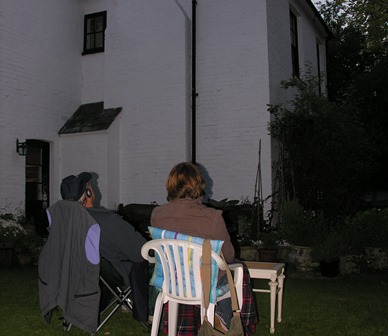
Position yourself beneath the roost exit at around sunset, watch the exit carefully and count bats as they emerge from a roost on at least two evenings.
*Lesser horseshoe bat counts start in late May, while greater horseshoe bat counts take place in July.
Submit your counts

After completing your surveys, submit your counts online or post your completed survey form to Freepost BAT CONSERVATION.
Your online recording pages enable you to view and download all data you have submitted. Read here how we share data via the NBN Atlas.
