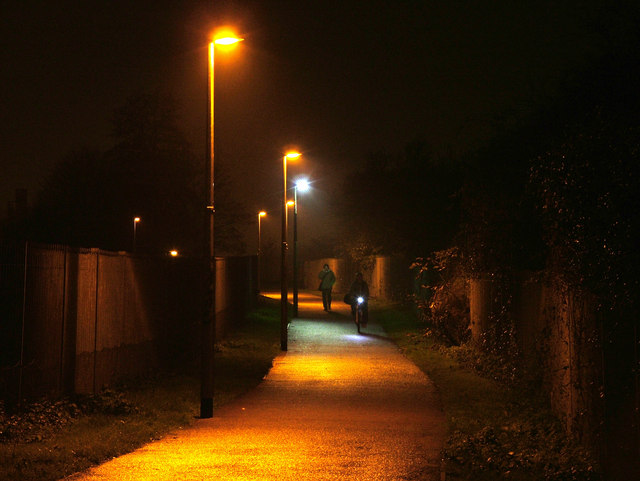
Bats are nocturnal animals that have adapted to a life in darkness, partly to avoid predation during daylight hours from bird of prey species such as sparrowhawks. Therefore the artificial lighting of bat roosts, access points and foraging pathways can be extremely disturbing to bats and should be avoided. Artificial light falling on or close to a bat roost can cause many problems for bats, by;
- delaying or preventing emergence from roosts, resulting in reduced foraging time and missing the peak time of insect abundance (just after dusk). As all bats in the UK feed on insects, this missed opportunity can have a serious impact on their survival and the growth rates of their young.
- in some cases lead to bats abandoning or becoming entombed in the roost when the entrance is lit up as bats will be less inclined to leave their roosts in these conditions. This is likely to be considered a breach of legislation as both bats and their roosts are protected by law.
- affecting the feeding behaviour of bats away from the roost. Slower flying species (lesser horseshoes, greater horseshoes and the 6 Myotis species) avoid illuminated areas and therefore lose foraging grounds if they are lit. This results in slower flying species having to use poorer quality foraging sites and losing out on prey, which are attracted to the surrounding lit areas, a so called ‘vacuum effect’.
- affecting commuting and foraging routes, which have been shown to be avoided if there is artificial light spill onto these areas.
Unfortunately these light-avoiding species include all of the UK’s rarest bat species. However, even our faster flying species recorded more widely (noctule, Leisler’s bat, serotine and pipistrelle species) can be impacted by artificial lighting. Some may opportunistically feed under certain streetlamps, as insects are frequently attracted to the short wave length light (UV) some emit, but this leaves them in danger of predation, peregrine falcons have been recorded hunting bats in our lit cities.
It is very important that bats are taken into account when considering the need to light an area if bats are known or suspected to use the area. There are a number of factors that will need to be considered under expert guidance, such as:
- Which species are present?
- How are they using the habitat – roosting, commuting, foraging?
- What are the existing light levels?
Please use the link below for research detailing the main principles of lighting guidance.